
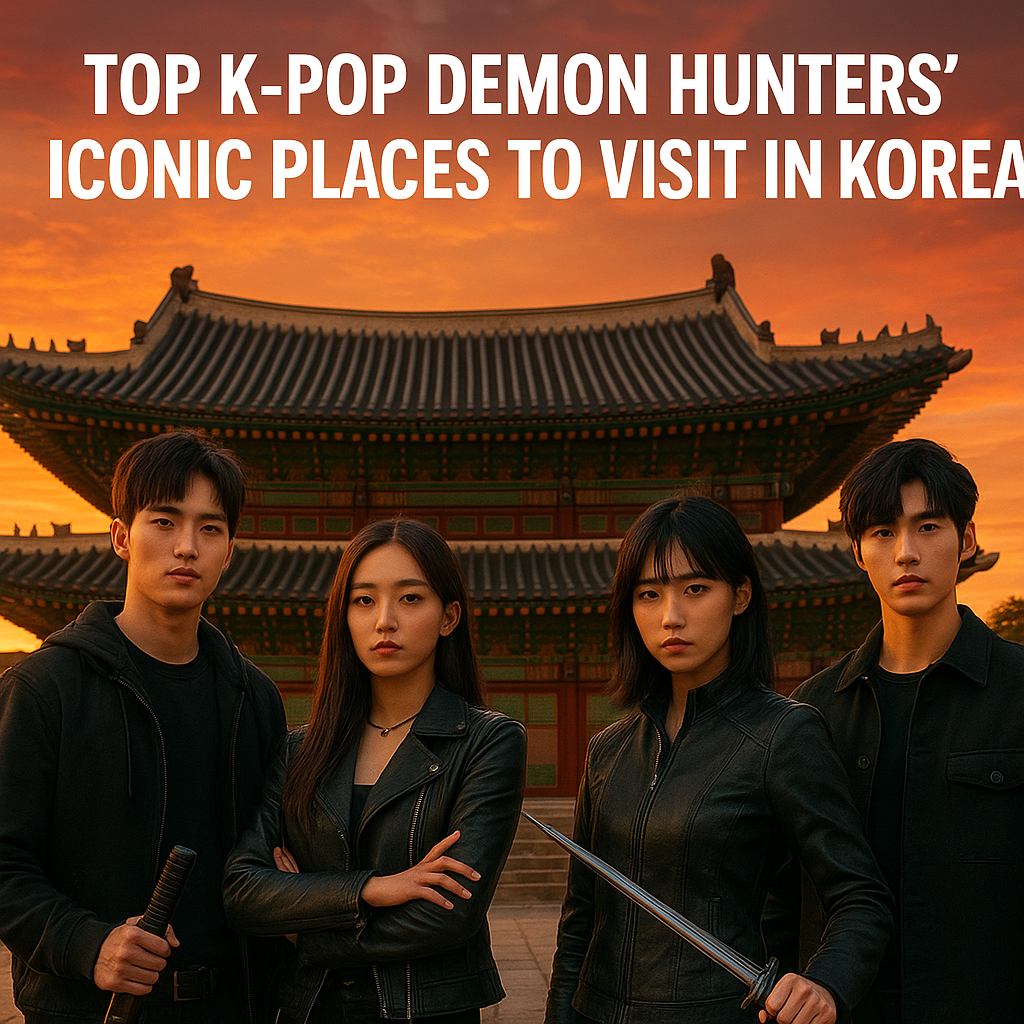
K-pop Demon Hunters’ Places in Korea
K-pop has taken the world by storm with its catchy tunes, energetic performances, and stunning visuals. Behind this dazzling industry lies a deep connection with Korean culture, history, and folklore—elements that enrich the storytelling and aesthetic appeal of many K-pop groups. Among the more intriguing themes that have found their way into K-pop concepts is that of demon hunters—mysterious warriors who fight supernatural evil forces in Korean folklore.

In this blog post, we delve into the fascinating world of K-pop Demon Hunters’ places in Korea, exploring how these historic and cultural sites inspire K-pop artists, their music videos, and performances. From ancient temples to mythological battlegrounds, these locations bring life to the captivating narratives woven by K-pop idols.

The Essence of Demon Hunters in Korean Culture
Before exploring the places connected to K-pop demon hunters, it’s important to understand their cultural significance.

Who Are Demon Hunters?
In Korean folklore, demon hunters, often called “Mugangs” or “Yeoju-K”, are heroic figures tasked with fighting malevolent spirits and evil demons (“Gwisin”). These characters appear in traditional stories, shamanistic rituals, and classical literature. They wield mystical powers and weapons, symbolizing protection from evil and the restoration of peace.

Influence on K-pop
This ancient cultural motif has permeated modern pop culture, especially K-pop, where many groups incorporate supernatural hunter themes into their imagery and storytelling. With dark aesthetics, powerful choreography, and storylines involving battles between good and evil, these elements resonate strongly with audiences, both domestic and international.

Iconic Demon Hunter-Related Places in Korea
Korea offers numerous actual locations steeped in legend and history associated with demon hunters, spirits, and mythological events. K-pop artists have drawn inspiration from these places, either directly filming there or using their stories as backdrops for their music videos and performances.

1. Gyeongju’s Bulguksa Temple – Mystic Spirituality
- Why It’s Relevant: Bulguksa Temple, located in Gyeongju, is a UNESCO World Heritage site known for its beautiful architecture and historical significance. Traditionally, temples like Bulguksa served as centers of spiritual power where monks practiced rituals to ward off evil spirits.
- K-pop Connection: Many K-pop videos referencing mystical themes channel the quiet spiritual strength similar to that found at Bulguksa. For example, groups portraying demon hunters might allude to Buddhist symbols or temple settings reflecting inner power and battle against evil forces.
2. Ganghwa Island – Legendary Battleground
- Why It’s Relevant: Ganghwa Island is steeped in history and folklore, known as the site of several historical battles and supernatural myths. Local legends tell of demon wars fought on this island’s fertile grounds.
- K-pop Connection: Some K-pop demon hunter concepts incorporate battle scenes filmed around rugged landscapes similar to Ganghwa, where warriors clash against shadowy entities. The island’s aura of past conflict inspires intense choreography and storytelling.
3. Inwangsan Mountain – Spiritual Energy Hotspot
- Why It’s Relevant: Inwangsan Mountain in Seoul is famous for its shamanistic traditions and is considered a mystical place filled with spiritual energy. Shamanistic rituals here often involve exorcisms and protective prayers against evil spirits.
- K-pop Connection: This location’s significance as a demon-repelling ground aligns perfectly with K-pop’s demon hunter archetypes, who fight evil with supernatural powers. It’s sometimes referenced symbolically in videos depicting enchanting, high-energy battles.
4. Jeonju Hanok Village – Tradition Meets Fantasy
- Why It’s Relevant: Known for its traditional Korean houses (“hanoks”), Jeonju Hanok Village represents a place where ancient culture thrives within modern society. It is a common filming site for historical dramas involving mythological elements.
- K-pop Connection: K-pop demon hunter imagery often blends traditional Korean aesthetics with contemporary flair. Jeonju’s authentic atmosphere gives a natural backdrop for themes of ancestral power and the timeless struggle between good and evil.
5. Boseong Green Tea Fields – Nature’s Hidden Mysteries
- Why It’s Relevant: The serene and lush tea fields of Boseong create a mystical natural environment, perfect for stories that merge the natural world with supernatural occurrences.
- K-pop Connection: Music videos featuring demon hunters often portray nature as a character itself—sometimes a battleground or a power source. The Boseong fields, with their otherworldly scenery, help illustrate these connections vividly.
How K-pop Groups Embrace Demon Hunter Themes
K-pop groups who adopt the demon hunter concept leverage these authentic Korean locations and their stories to deepen their artistic narrative.
Visual Storytelling in MVs
Groups like ATEEZ, Stray Kids, and ATEEZ have explored themes of battling darkness and protecting the light through complex storylines involving supernatural adversaries. Their music videos often contain:
- Dark, medieval-style costumes reminiscent of fantasy warriors.
- Symbolic weapons, like swords or talismans, that echo traditional demon-hunting motifs.
- Atmospheric settings that recall ancient Korean sites or spiritual battlegrounds.
Choreography and Performance
The intense and sharp dance moves mimic combat sequences, symbolizing a fight against evil forces. These high-energy performances reflect the demon hunter’s determination, strength, and agility, channeling mythical heroism.
Lyrics and Albums Themes
Songs often explore narratives about confronting inner demons, external obstacles, and fighting for justice and hope, mirroring the classic demon hunter’s mission. Some albums even contain conceptual frameworks illustrating a battle between opposing forces, using Korean cultural references.
Exploring Demon Hunter Themes as a K-pop Fan in Korea
If you’re a fan eager to experience K-pop’s mystical side firsthand, visiting these demon hunter-influenced locations can deepen your appreciation.
Suggested Itinerary for a K-pop Demon Hunter Tour
| Place | Highlights | How It Connects to K-pop |
|---|---|---|
| Bulguksa Temple | Explore ancient Buddhist architecture | Spiritual energy reflected in mystical K-pop themes |
| Inwangsan Mountain | Hiking and shamanic ritual history | Atmosphere of spiritual protection in dance concepts |
| Jeonju Hanok Village | Traditional Korean houses and crafts | Authentic backdrop for historical-fantasy storytelling |
| Boseong Green Tea Fields | Scenic views and photo spots | Nature as a mystical setting in demon hunter narratives |
| Ganghwa Island | Historical sites and natural beauty | Inspiration for battlefield visuals and mythological themes |
Visit these places not only for their beauty but also to feel the cultural depth and mythic atmosphere that inspire many K-pop demon hunter concepts.
Conclusion
The theme of K-pop demon hunters brings a compelling blend of traditional Korean folklore, mystical aesthetics, and modern pop culture dynamism. The places tied to this theme—ancient temples, mythic mountains, historic villages, and natural landscapes—are not only cultural treasures but also vibrant sources of creative inspiration. Whether reflected in music videos, performances, or storytelling, these locations help K-pop idols breathe life into the legendary battle between light and darkness.
Understanding the significance of these places enriches the fan experience, allowing us to appreciate the layers of meaning behind what we watch and listen to. For those captivated by Korean pop culture’s fusion of old and new, exploring the realm of K-pop demon hunters’ places in Korea is a fascinating journey into both the heart of Korea’s past and the pulse of its pop future.